
Pokémon Legends: Z-A – Is Kalos’s Revitalization Enough to Fix Franchise’s Deepest Flaws?









Popular Now
Among Us
 Poppy Playtime
 League of Legends
FIFA 23
League of Legends
FIFA 23
 Fortnite
 Garena Free Fire: Kalahari
 Minecraft
 Rust
Rust
 Auto X Drift Racing 3
 Geometry Dash
 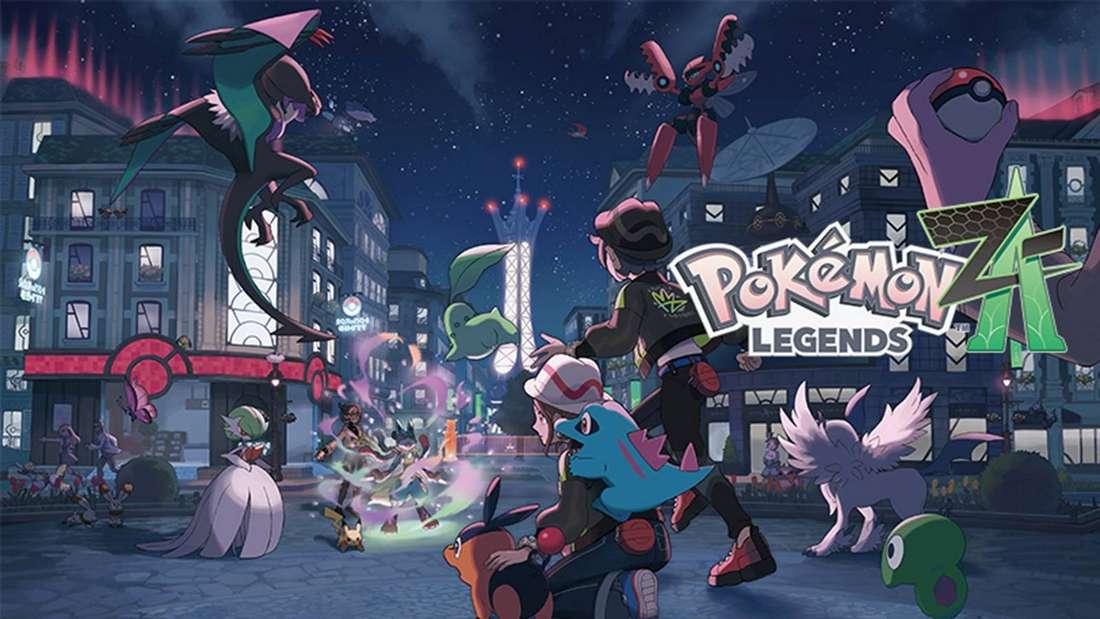 The recent announcement of Pokémon Legends: Z-A has ignited considerable discussion among the global gaming community, particularly among long-time fans and critical observers of the Pokémon franchise. Set to return players to the beloved Kalos region with a unique focus on ‘urban redevelopment’ within Lumiose City, this upcoming Nintendo Switch title promises a fresh perspective. However, beneath the surface of renewed excitement for Mega Evolution and the allure of a familiar yet re-imagined setting, a critical question persists: will Legends: Z-A genuinely address the fundamental, long-standing problems that have plagued modern Pokémon games, or will it merely offer a different veneer over familiar issues?
The original Pokémon Legends: Arceus was lauded for its innovative approach, breaking away from the traditional formula by introducing action-RPG mechanics, a new catching system, and semi-open zones that encouraged exploration. It was seen as a bold step towards modernizing the venerable series. Yet, even Arceus, while a critical and commercial success, wasn’t without its detractors, who pointed to persistent technical limitations, repetitive mission design, and graphical fidelity that lagged behind contemporary Nintendo Switch games. With Z-A, the stakes are arguably higher, as fans anticipate a true evolution of the ‘Legends’ concept rather than a mere iteration.
The Persistent Problem: Technical Debt and Stagnant Mechanics
For many years, the most significant criticism leveled against new Pokémon titles has revolved around their technical performance and visual presentation. Games like Pokémon Scarlet and Violet, despite their ambitious open-world design, suffered from severe frame rate drops, graphical glitches, and a general lack of polish that severely impacted the player experience. This ‘technical debt’ isn’t just about graphics; it speaks to deeper issues within Game Freak’s development pipeline and their ability to leverage modern console hardware effectively. Players expect a premium experience from one of the highest-grossing media franchises in history, and repeated instances of subpar technical execution erode trust and enjoyment.
Furthermore, while the ‘Legends’ sub-series has innovated on the catching and battle systems, the core loop of Pokémon RPGs often feels simplistic and lacks the depth seen in other successful RPGs. The difficulty curve remains largely flat, challenges are minimal, and the strategic depth, outside of competitive battling, can feel underdeveloped. For a series with such rich potential for deep tactical engagement and immersive world-building, the current offerings often feel like missed opportunities. Will Z-A introduce robust game mechanics that genuinely challenge players, or will it remain an experience primarily geared towards casual exploration and collection?
 Kalos, Lumiose, and the Urban Redevelopment Paradox
 Kalos, Lumiose, and the Urban Redevelopment Paradox
The premise of ‘urban redevelopment’ in Lumiose City presents an intriguing narrative framework. It suggests a dynamic world that changes based on player interaction or story progression, potentially offering unique gameplay loops beyond simply catching Pokémon in the wild. However, this also raises concerns: will this ‘redevelopment’ translate into a truly interactive and player-driven environment, or will it merely serve as a linear mission structure guiding players through predetermined phases of city building? The success of open-world Pokémon hinges on meaningful player agency, not just aesthetic changes.
Lumiose City, a vibrant and complex hub from the original X and Y, offers a tantalizing canvas for such an experiment. But a sprawling city, by its nature, can also feel restrictive if not designed with true freedom in mind. Unlike the more natural, open environments of Hisui, a city environment in Pokémon Legends: Z-A could inadvertently highlight the series’ tendency towards segmented zones and invisible walls, rather than fostering seamless exploration. For the game to truly innovate, it needs to break away from these traditional constraints and offer a genuinely dynamic, reactive urban landscape where player choices have visible, lasting impact.
The Return of Mega Evolution: Nostalgia vs. Innovation
The confirmation of Mega Evolution’s return has undoubtedly been a massive draw for many fans. This powerful battle mechanic, first introduced in Kalos, was a highlight for many and its absence in recent generations was keenly felt. While its inclusion is a welcome nod to fan service and franchise revitalization, it also begs the question: is bringing back an old mechanic truly an innovation, or is it a safe bet that avoids the risk of introducing genuinely new, game-changing combat systems? For Z-A to stand out, it needs to integrate Mega Evolution not just as a nostalgic callback, but as a deeply woven element of a refined battle system that offers new strategic layers.
A critical look at the broader gaming industry shows a trend towards deeper RPG elements, player choice, and immersive narratives. While Pokémon games consistently rank as best-sellers, their critical reception often highlights a disparity between commercial success and perceived quality in certain aspects. To truly compete in the modern landscape of console gaming experiences, Pokémon Legends: Z-A must strive for excellence across all facets – storytelling, technical execution, and gameplay depth – not just rely on the allure of its IP and beloved mechanics.
Conclusion: A Crossroads for the Pokémon Franchise
Pokémon Legends: Z-A stands at a critical juncture for the entire franchise. It has the potential to build upon the successes of Arceus, delivering an engaging, polished, and truly innovative experience within the rich backdrop of Kalos. The concept of ‘urban redevelopment’ could, if executed with genuine player agency and dynamic world changes, set a new standard for how Pokémon interact with their environments. The return of Mega Evolution can inject excitement into battles. However, these promising elements must not overshadow the persistent issues that have long held the series back: the need for robust technical performance, a more challenging and deeper RPG experience, and truly unhindered open-world exploration.
Ultimately, whether Z-A successfully addresses Pokémon’s biggest problem – the stagnation in technical prowess and fundamental gameplay evolution – will determine if it’s merely another enjoyable entry or a landmark title that genuinely pushes the venerable franchise into a new era of player engagement and critical acclaim. The global gaming industry analysis will be watching closely to see if Game Freak can deliver on the immense potential hinted at in this latest announcement.